Market Insight Spotlights
Bronze Coast's Average Sale Price Rose 20% from Q4 2025 to Q1 2026. Here's What Actually Moved.
Three houses sold on the Bronze Coast in the final quarter of 2025. Three houses sold there again in the first quarter of 2026. Between those two quarters, the average sale price climbed from roughly $1.58 million to roughly $1.9 million, a jump north of 20 percent. If you saw that number on a portal or heard it from a friend house-hunting in Alameda, the natural read is that the neighborhood got hotter. It didn't. Three different houses sold.
That is the whole story of the Bronze Coast right now, and it is worth sitting with before you trust any single price figure attached to this neighborhood.
Bronze Coast runs from Grand Street to Park Street, bounded by Central Avenue on the north and the lagoon on the south. It is a small, tightly held pocket of Alameda's Victorian, Craftsman, and Queen Anne housing stock, and very few of those homes change hands in any given three-month window. When a market moves this few units a quarter, the average price is really just a description of which specific houses happened to close, not a signal about where values are heading.
Redfin's own neighborhood index, current as of March 2026, told a different story entirely: a median sale price of $1,170,000, down 11.5 percent year over year. That figure and the quarterly average above aren't contradicting each other because one is wrong. They're both accurate descriptions of a market too thin to average meaningfully. A single lagoon-dock property entering or leaving the sample can swing the number by six figures. So can a smaller Craftsman on a side street two blocks from Chestnut Market. In a neighborhood that trades three homes a quarter, the "market" is really three data points wearing a market's clothing.
If you're comparing Bronze Coast to a neighborhood like the West End or Bay Farm, where dozens of homes sell each quarter, you're comparing a statistic to an anecdote. Both are useful. They are not the same kind of useful.
Here's where it gets genuinely interesting, and where the quarter-over-quarter data actually tells you something.
In the fourth quarter of 2025, Bronze Coast homes drew one to two offers each and sold about 21 percent over list. In the first quarter of 2026, homes drew five to six offers each, nearly triple the competition, and sold for a smaller premium, about 14 percent over list.
That's backwards from what most buyers expect. More offers should mean fiercer bidding and a bigger number over asking, not a smaller one. Something else is shaping how far buyers are willing to stretch, and the likeliest explanation sits in the financing, not the enthusiasm.
Alameda County's 2026 conforming loan limit sits at $832,750, with a high-balance ceiling of $1,249,125. Bronze Coast's quarterly averages, at $1.58 million and $1.9 million, both sit well above that ceiling. Nearly every financed purchase in this neighborhood is a jumbo loan, which means nearly every buyer writing an offer here has already cleared a higher bar of underwriting scrutiny, larger reserves, and a more conservative lender before they ever see the property.
That changes how competition behaves. A pool of five or six jumbo-qualified buyers is not the same as five or six buyers in a conforming price band. They tend to be more disciplined about their ceiling because a jumbo lender has already told them what that ceiling is. More offers doesn't necessarily mean more room to stretch. It can mean more buyers arriving at the same disciplined number, each one unwilling to go meaningfully past it. A smaller field with fewer constraints, like the one-to-two-offer quarter before it, can actually produce a wider premium if even one buyer decides the specific house is worth reaching for.
This is the part a raw price chart will never show you. The offer count and the percentage over list are telling you more about financing behavior than about how hot the neighborhood is.
Even inside Bronze Coast's small footprint, the housing stock isn't uniform. The blocks closest to the lagoon, in the neighborhood's southern reach, include homes with private docks and direct water access. Those are consistently the properties most likely to push a purchase from conforming into jumbo territory on their own, independent of the rest of the neighborhood's pricing.
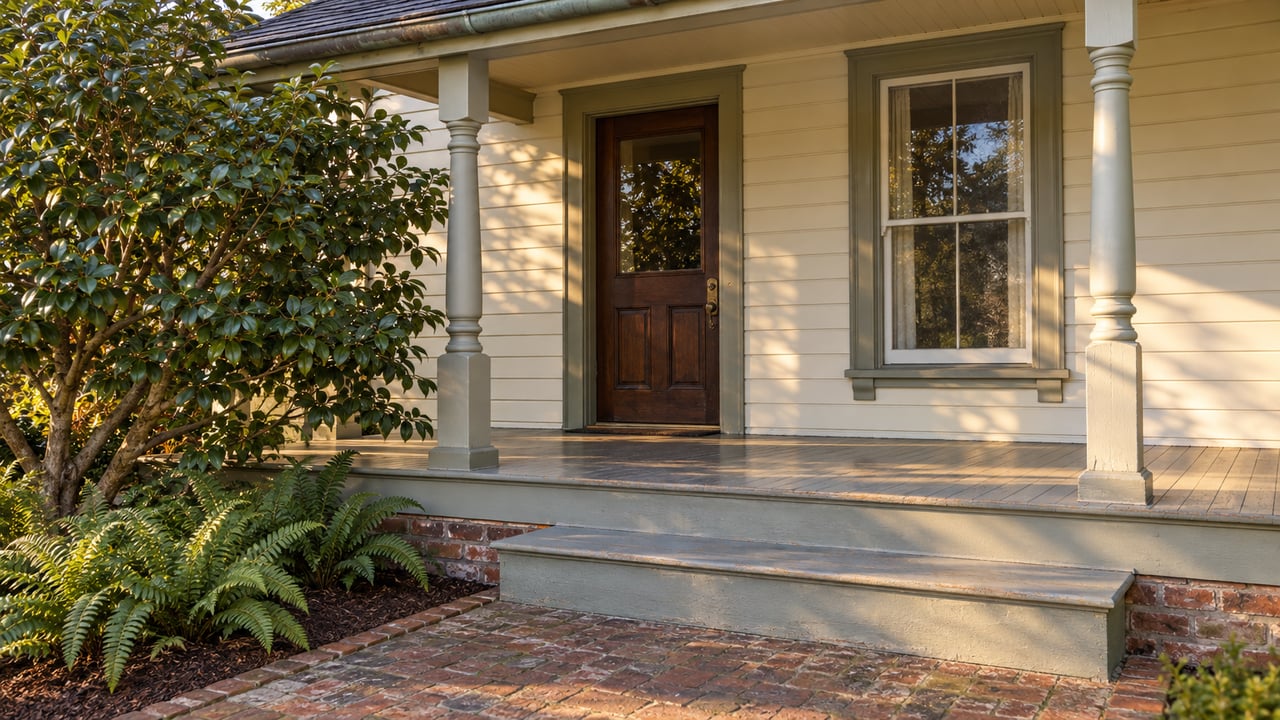
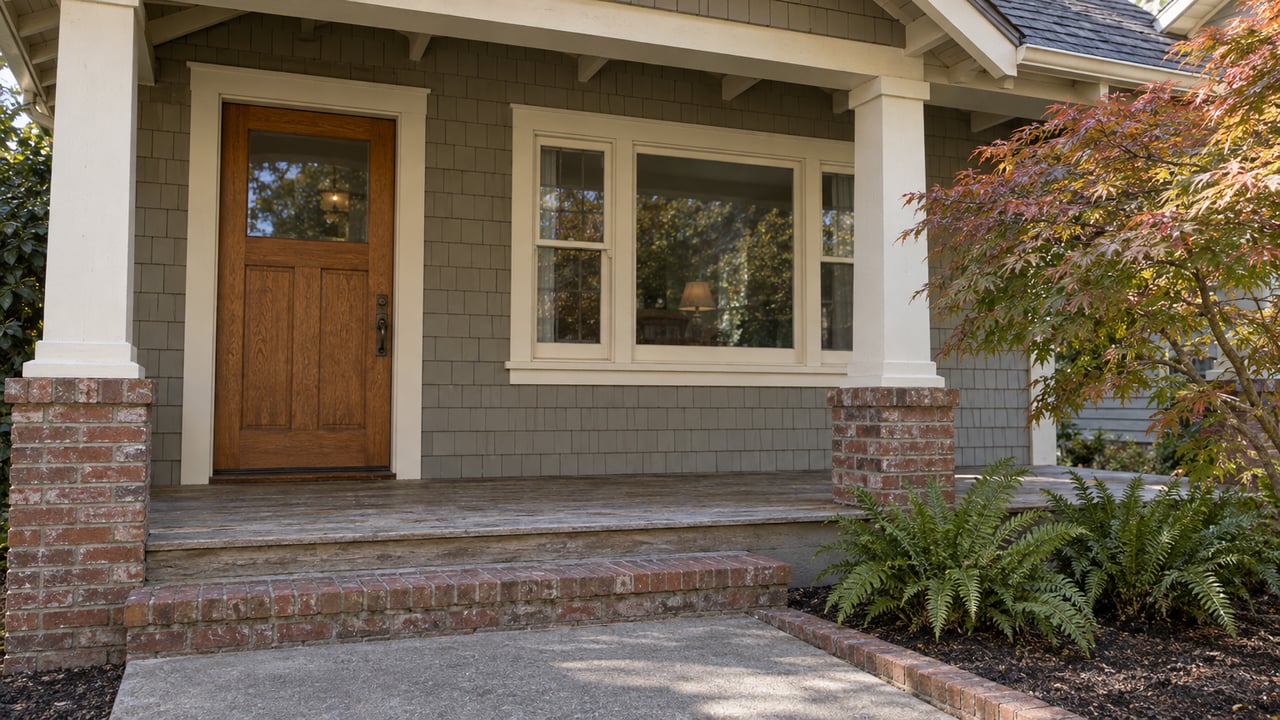
Move a few blocks north toward Central Avenue and you're in a different product: well-kept Victorians and Craftsman homes on tree-lined streets, walkable to Blue Dot Cafe and Coffee Bar, Marti's Place, and Chestnut Market, without the dock premium attached. Both are Bronze Coast. Both get folded into the same neighborhood average. But a buyer comparing "Bronze Coast pricing" without asking which blocks generated that number is comparing two different products as if they were one.
This is the same reason the quarterly average bounces around so much. A dock-access sale and a non-dock sale sitting in the same three-house sample will produce a very different average than three non-dock sales would, and the portal listing won't tell you which mix you're looking at.
If you're comparing Bronze Coast to other Alameda neighborhoods, three things are worth carrying with you:
None of this means the neighborhood is unpredictable in a way that should worry you. It means the predictability lives in the mechanics, the loan limits, the dock premium, the housing stock, not in a single headline number that changes every time three different houses close escrow.
Is the Bronze Coast median price reliable for comparing to other neighborhoods? Treat it as a rough signal, not a precise benchmark. With only a handful of single-family sales most quarters, the figure is highly sensitive to which specific homes happened to sell, including whether any had lagoon dock access.
Do I need a jumbo loan to buy in Bronze Coast? Most likely, yes. Recent quarterly averages have sat well above Alameda County's 2026 conforming loan limit of $832,750 and high-balance ceiling of $1,249,125, meaning most financed purchases here clear the jumbo threshold.
How common are lagoon dock properties? They're limited to the southernmost blocks along the lagoon and represent a small share of the neighborhood's total housing stock. Most Bronze Coast homes are Victorian, Craftsman, or Queen Anne properties without direct water access.
If you're trying to make sense of what a specific Bronze Coast listing is actually worth, or how it compares to something a few blocks away, that's a conversation worth having before you write an offer, not after. Friedrich Homes has spent decades reading Alameda's smaller, tightly held pockets like this one, and we're glad to walk through what a given quarter's numbers actually mean for your specific search.
This article is general information, not legal, tax or financial advice. Consult a qualified professional about your situation.
Insights on real estate, design, local living, and the communities we call home.
Buying or selling a home is one of life's most important decisions. We provide the market knowledge, negotiation expertise, and support needed to help you move forward confidently. Together, we'll create a strategy built around your success.
Friedrich Homes Group
(510) 919-7280
[email protected]
Friedrich, Jill Elizabeth | CA DRE# 02062807
Compass California II, Inc. | CA DRE# 02029039
1410 Park Ave Alameda, CA 94501