Market Insight Spotlights
Selling a Gold Coast Victorian in 2026: The Three Inspection Findings That Decide Your Escrow
Two Alameda sales from the two-week window ending July 19, 2026 sit at opposite ends of the same market. A home built in 1885 on Santa Clara Avenue listed for $849,000 and closed at $1,350,000, drawing the kind of overbid a seller remembers for a decade. In the same period, a unit on Otis Drive took 279 days before an offer was accepted. Same city, same fortnight, same MLS.
That gap is the story of the current Gold Coast market, and it is almost entirely a preparation story. The three inspection findings below are what a listing agent watches for before deciding whether a Victorian will run hot or drift.
The median sale price in Alameda climbed to $1,349,391 in the two weeks ending July 19, 2026, up from $1,200,000 two weeks earlier, and one property in that window received nine offers. At the same time, the citywide picture is softer: the July 2026 median list price sat closer to $1.06 million, and price per square foot was down about four percent year over year. Alameda County's Realtor.com-sourced median listing price came in at $949,444 for June 2026.
Averages of averages tell you nothing about a Gold Coast Victorian. What they hide is the split between homes that were inspection-ready at listing and homes that were not. In a market where the share of Alameda listings with price reductions climbed from 16.82% to 28.57% year over year, the friction points below are where those reductions get negotiated.
Every East Bay seller has heard the sewer lateral warning. Almost none of them realize Alameda is treated differently from Oakland, Piedmont, or El Cerrito under the same regional program.
The property owner is responsible for the entire private sewer lateral from the home to the public main, with the exception of Alameda and Albany, where responsibility ends at the property line or curbside cleanout, meaning the upper lateral only. Everything past the property line, out under the street to the main, is the City of Alameda's problem, not yours. On a Gold Coast lot with a deep front setback, that carve-out can shift five figures of exposure off the seller's side of the ledger.
The rest of the rules a Gold Coast seller should know before ordering a scope:
One process note worth planning around: EBMUD's PSL program is transitioning to a new software platform, Accela, with a launch anticipated during summer 2026. Buyers who assume the online scheduling flow they remember from last year still works may run into delays. Order the inspection early.
The certificate itself is narrower than most sellers expect. EBMUD warrants only that the tested portion of the lateral passed a verification test on the date indicated, and disclaims any representation as to its existing or future condition. That language matters when negotiating repair credits, because a passing certificate does not mean the buyer's inspector cannot flag the same line.
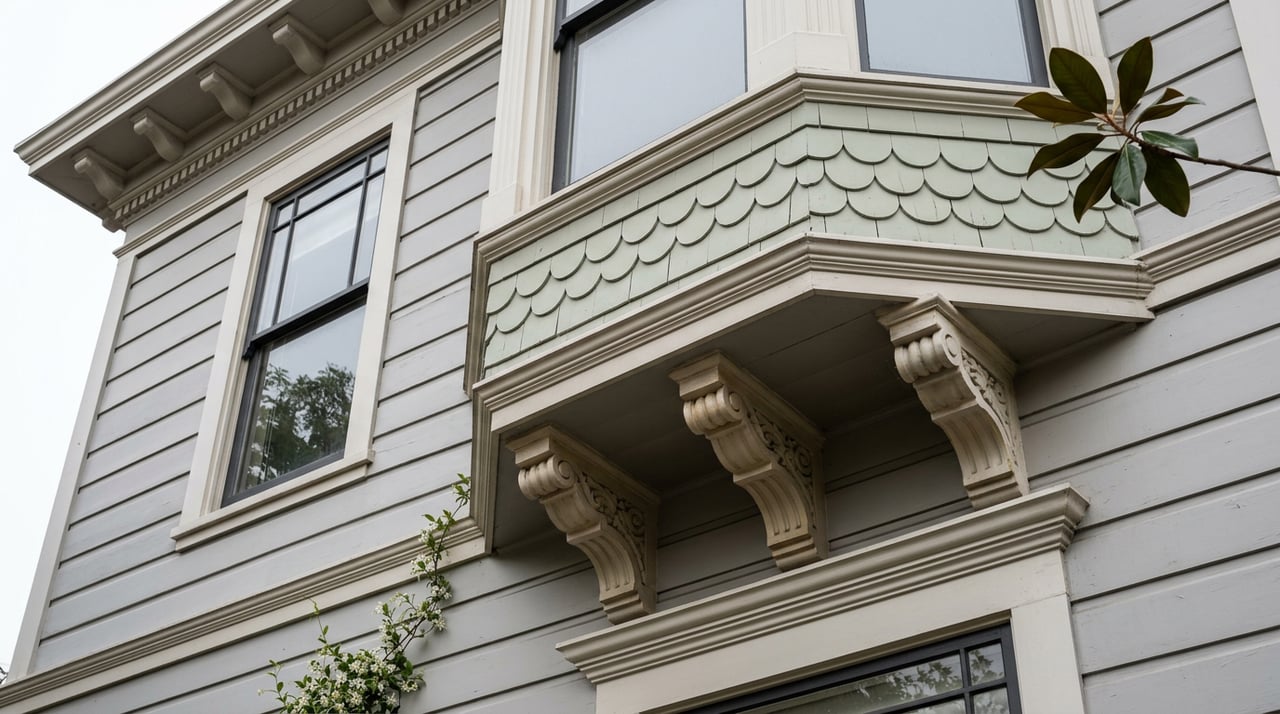
The Victorian and Edwardian blocks north of Encinal are the reason many buyers want the Gold Coast in the first place. The same construction era is the reason those homes cost more to close.
Local plumbers describe the pattern plainly: original clay sewer laterals crack under shifting bay-adjacent soil, and galvanized steel supply lines have narrowed with mineral buildup after decades of service. In a market where many Alameda homes are decades old, buyers and inspectors look closely at pipe condition and water pressure, and addressing corroded galvanized lines or a failing water heater before listing removes a common negotiation point and signals that the property has been properly maintained.
What tends to show up in a Gold Coast inspection report on a home built before 1940:
None of these findings, on their own, should kill an offer. All of them, quoted at retail by a buyer's contractor during the response period, will. The seller who has already scoped the lateral, priced the galvanized re-pipe, and produced a scope-of-work memo controls that conversation. The seller who has not, does not.
Older Alameda homes were built on top of what is essentially fill and bay mud. The failure mode is not usually catastrophic. It is a cripple wall that was never braced and a mudsill that was never bolted, on a home that has ridden out Loma Prieta and the 2014 South Napa quake without visible damage.
Buyers in 2026 arrive at showings pre-educated on this. Their agents point at the crawl space access before the kitchen. And their lenders and insurers care too: many carriers now underwrite retrofit status as a condition of binding a policy at reasonable premium.
The scope is usually smaller than sellers fear. Cripple wall bracing and foundation bolting on a typical single-family Victorian is a defined, permitted project, not a full foundation replacement. Alameda contractors familiar with the housing stock note that most projects are completed within four to eight weeks depending on building size and complexity. On a home where the seller has already produced a permitted retrofit letter, that entire negotiation lane closes.
Two documents to have ready in the disclosure packet before you list:
If no retrofit exists, get an assessment before you list rather than after the offer arrives. A written scope and a bid in the disclosure packet reframes the finding from an open-ended risk into a priced, bounded line item.
The order matters, because each step feeds the next.
Does Alameda require a Compliance Certificate before close of escrow? In practice, buyers and their lenders expect one, and the regional program is triggered at title transfer. In a property sale transaction, it is up to the buyer and seller to negotiate responsibility for obtaining the Compliance Certificate. On a Gold Coast Victorian, sellers usually take it on to control the timeline.
Can we close on a Time Extension Certificate? Yes. The buyer takes the property with a 180-day window to complete the work, and the $4,500 deposit is refunded when compliance is achieved.
What if the lateral fails after we've already accepted an offer? Alameda's upper-lateral-only rule keeps the exposure bounded to the pipe on your side of the property line. That is genuinely better than the deal an Oakland seller gets on the same block of a shared history.
Is now a bad time to list a Victorian if the median is soft? The median is not the market. In the July 6–19 window, the highest offer count on a single property was nine, and the oldest home in the report closed nearly $500,000 over list. Preparation is doing the work the median cannot.
Selling an older Alameda home is a preparation problem before it is a pricing problem. If you are thinking about a Gold Coast listing this fall or next spring, Friedrich Homes Group can walk your home before you touch a single vendor and tell you exactly which of these three findings deserves budget and which does not. Get a free home valuation, and a conversation about what your Victorian is actually worth after prep.
Insights on real estate, design, local living, and the communities we call home.

Buying or selling a home is one of life's most important decisions. We provide the market knowledge, negotiation expertise, and support needed to help you move forward confidently. Together, we'll create a strategy built around your success.

Friedrich Homes Group
(510) 919-7280
[email protected]
Friedrich, Jill Elizabeth | CA DRE# 02062807
Compass California II, Inc. | CA DRE# 02029039
1410 Park Ave Alameda, CA 94501